
General Information
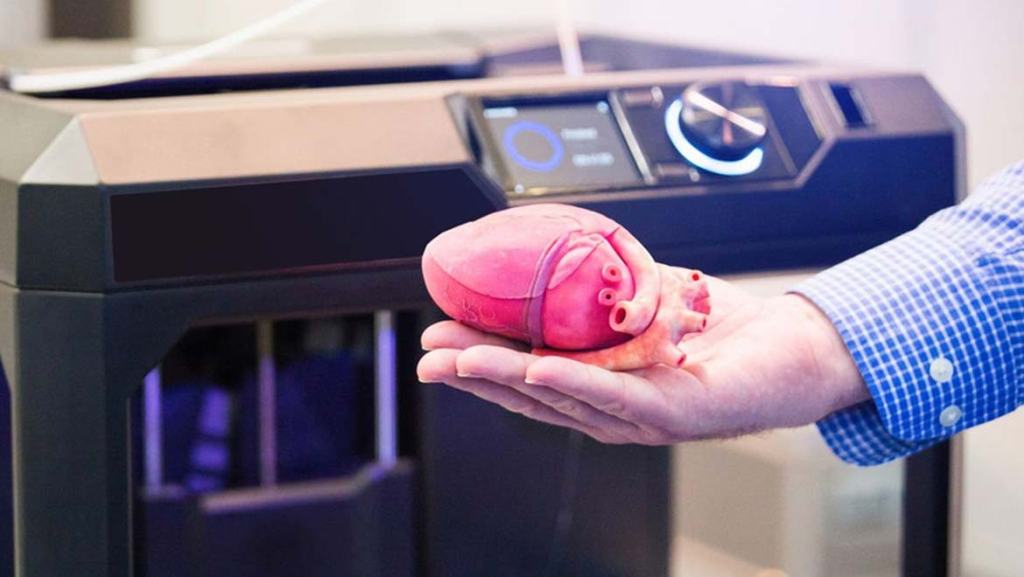
I am writing a report on Human Organ Printing. Human Organ Printing is a tech that can help patients to get an organ transplant with a bio-printed organ. 3-D printing is used to make the organs with bio-life cells so that they can replace the damaged organ. 3-D printers are mostly computer-controlled and these computers use software that may be vulnerable to development errors which can lead to many security issues. (Corey Nachreiner, August 2018). A cyber attack can cause a contravention which can lead to a privacy leak. Other than the security issue, organ printing also carries health issues as well. As per now, organ printing is not that much advanced to be totally able to replace actual human organs. Even a little bit of a problem in these 3-D printed organs can lead to severe health issues causing severe sickness. These detrimental issues of organ printing are necessary to take account of and important issues for the researchers to work on.
Technical and Historical Information
The history of 3-D printing dates back to 1981 when Hideo Kodama published his work of functional rapid-prototyping system by using photo polymers. This model was solid and built up in the form of layers. Then in 1983, Charles Hull invented stereo-lithography. This method used acrylic-based photo polymer which then was hit by a UV- beam which solidified it in form of plastic. This technology wasn’t perfect because the machines were fairly expensive and the material used in the process showed signs of warping when it hardened. Later on, new materials were found which were stronger than the earlier generation of photo polymers. In 1999, first 3-D printed human organ was transplanted. (Dana Goldberg, April 2018).

Impact of Technology
Dhannu Daniel, Healthcare IT (2019) states that 3-D printing has evolved in the medical sector and creation of a functioning human heart is now possible by the use of silicon prototype. Medical 3-D printing has an estimated market value of US $1.2 billion by 2020. He also pointed out that thirty five percent surgeries for implants will be performed by 3-D printing by 2019. The selected technology is a Disruptive Technology as it is a ground breaking product which creates a completely new industry and affects millions of lives.
References
(Corey Nachreiner “The security issues 3D printing should solve before going mainstream” August,2018 Helpnetsecurity.com url: https://www.helpnetsecurity.com/2018/08/08/security-issues-3d-printing/ )
(Dana Goldberg “History of 3D Printing: It’s Older Than You Are (That Is, If You’re Under 30)” April 2018 autodesk.com url: https://www.autodesk.com/redshift/history-of-3d-printing/)
(Google.com. (2019). human organ printing – Google Search. [online] Available at: https://www.google.com/search?q=human+organ+printing&rlz=1C1CHBF_enPK834PK834&source=lnms&tbm=isch&sa=X&ved=0ahUKEwiuppXWraXkAhUTjuYKHef2A68Q_AUIESgB&biw=1536&bih=754#imgrc=txuYHXShvlDk9M)
(Google.com. (2019). human organ printing – Google Search. [online] Available at: https://www.google.com/search?q=human+organ+printing&rlz=1C1CHBF_enPK834PK834&source=lnms&tbm=isch&sa=X&ved=0ahUKEwiuppXWraXkAhUTjuYKHef2A68Q_AUIESgB&biw=1536&bih=754#imgrc=CTtjD7GX8PAqUM)
(Daniel, D. (2019). 3D printing implants and organs is the new reality. [online] Healthcare IT Australia. Available at: https://www.healthcareit.com.au/article/3d-printing-implants-and-organs-new-reality/)
 shaktech